


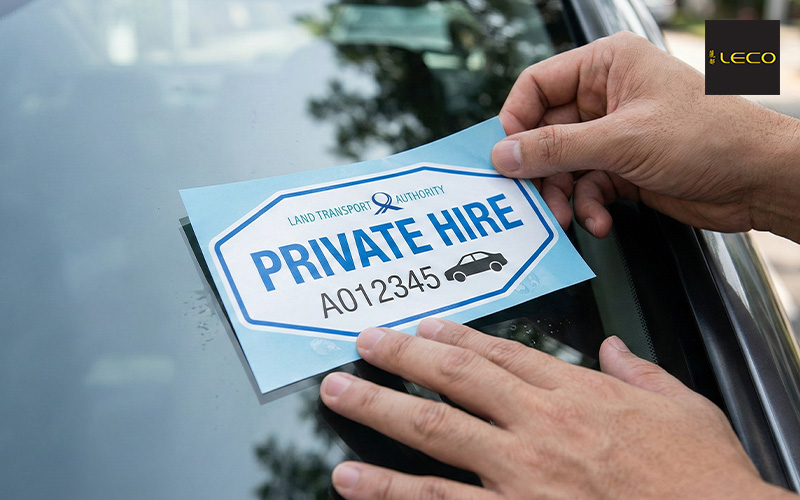
Key Takeaways
- The right private hire vehicle depends on your driving pattern, mileage, and financial strategy.
- A suitable vehicle for PHV work should balance fuel efficiency, maintenance costs, and passenger appeal.
- PHV daily driving needs differ between part-time and full-time drivers, affecting vehicle type choice.
- Car comfort for passengers directly influences ratings and repeat bookings.
- Your rental, leasing, or ownership decision determines long-term cost control and flexibility.
Introduction
Choosing the right private hire vehicle for PHV work in Singapore is not a one-size-fits-all decision. Drivers enter the industry with different goals. Some focus on maximising weekly earnings, others prioritise predictable expenses, while some want flexibility without long-term commitment.
The car you choose affects operating costs, passenger ratings, fatigue levels, and long-term sustainability. It also shapes how well your vehicle supports daily driving needs, especially in Singapore’s dense traffic, frequent stop-start conditions, and tight carparks.
This guide breaks down common vehicle types used for PHV work, explains how they align with different driving profiles, addresses misconceptions, and examines renting versus owning so you can make a practical decision.
Sedans: Balanced and Practical for Everyday PHV Work
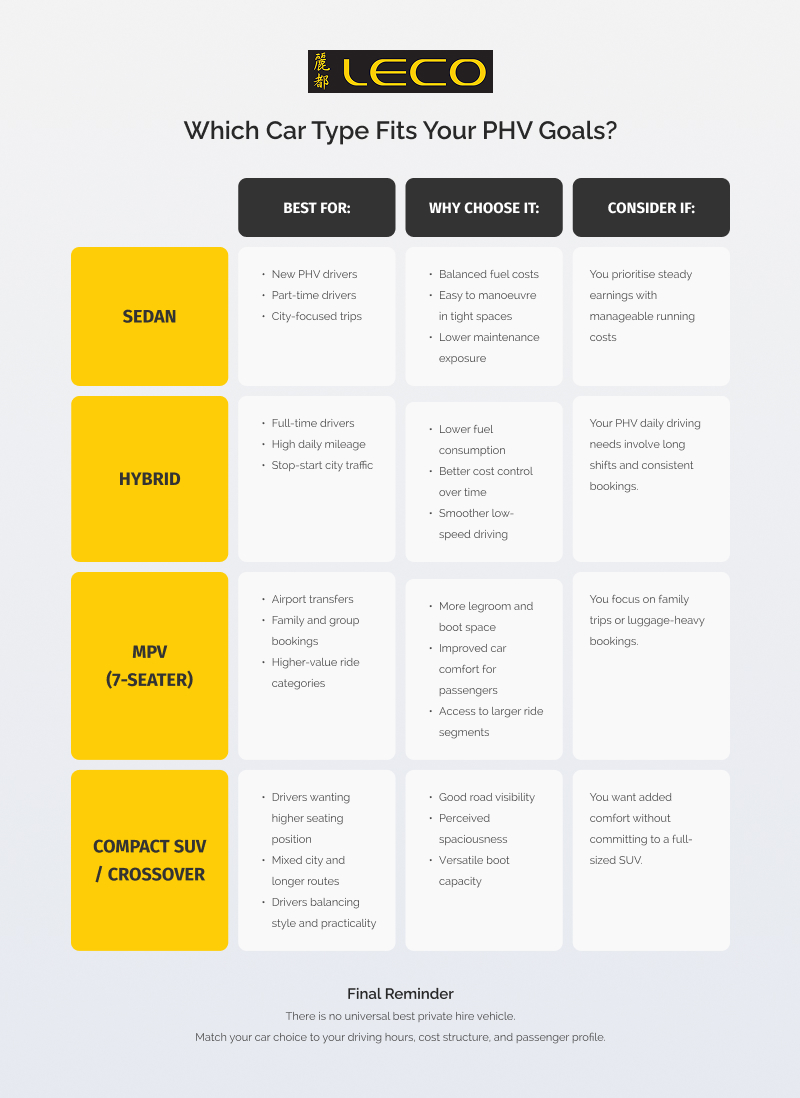
Sedans remain a popular starting point for PHV drivers. They offer a balance between affordability, ease of handling, and reasonable fuel consumption. For city commuting, office trips, and short rides, they typically meet passenger expectations without excessive running costs.
For drivers entering the industry, sedans often represent a suitable vehicle for PHV operations because they are easier to maintain and navigate in congested areas.
However, sedans may fall short for airport transfers or larger groups due to limited boot space. Drivers who frequently accept family or luggage-heavy bookings may find the space restrictive over time.
Hybrid Models: Efficient for High-Mileage Drivers
Hybrid cars are increasingly popular among drivers who clock long hours daily. Stop-start traffic conditions in Singapore allow hybrids to maximise fuel savings through regenerative braking and electric assistance at low speeds.
Lower petrol consumption supports stronger weekly margins, especially for full-time drivers. Over time, the cumulative savings can offset slightly higher purchase or rental costs.
Drivers exploring fuel-efficient crossover hybrids often look at options from a Toyota Sienta dealer in Singapore to balance economy with passenger appeal. The elevated seating position can also improve comfort for passengers without significantly increasing fuel costs.
For drivers whose daily driving involves consistent 8 to 12-hour shifts, hybrid vehicles often provide more stable long-term cost control.
MPVs: Space, Comfort, and Group Bookings
Multi-purpose vehicles suit drivers targeting airport transfers, family trips, and group bookings. Extra cabin space enhances car comfort for passengers, particularly during longer rides.
Better rear legroom and larger boot capacity can translate into higher ratings. Certain ride categories may also require larger vehicles, depending on platform requirements.
The trade-off lies in higher fuel consumption and maintenance expenses. MPVs are typically more suitable for drivers who operate strategically during peak travel hours or focus on specific booking segments rather than purely volume-based trips.
Compact SUVs and Crossovers: Visibility and Versatility
Compact SUVs offer a higher driving position and improved road visibility. Many drivers appreciate the added sense of control in heavy traffic.
Passengers may perceive crossovers as more spacious than sedans, even if cabin dimensions are similar. This perception can influence the overall ride experience.
Drivers exploring this category often consider models like the Honda ZR-V Hybrid, which balances fuel efficiency with a comfortable cabin and elevated seating position. This makes it a practical option for those looking to meet everyday PHV daily driving needs while maintaining reasonable running costs.
That said, not all SUVs are equally suitable. Larger, heavier models may increase fuel consumption without delivering proportional returns. It is important to assess whether the added size genuinely improves passenger comfort or merely increases operating expenses.
Common Misconceptions About Private Hire Vehicle Selection
Bigger Means More Profitable
A larger or premium car does not automatically guarantee higher earnings. Profitability depends on operating costs, consistency of bookings, and driver endurance.
Personal Preference Equals Work Suitability
Some drivers select vehicles based on personal enjoyment rather than commercial practicality. A car that feels enjoyable to drive may not support long-term cost efficiency or passenger comfort for extended shifts.
Owning Is Always Cheaper
Ownership can lower long-term costs for full-time drivers, but it involves higher upfront commitment and regulatory responsibility. Those sourcing vehicles independently may engage a parallel importer to explore alternative pricing options, though servicing considerations should be factored into the overall cost structure.
Renting, Leasing, or Owning: Which Works for You?
Renting or Leasing
Renting or leasing involves paying a fixed weekly or monthly fee to use a PHV-registered vehicle. Maintenance and servicing are often included. This arrangement suits new drivers testing the market or those who value predictable expenses.
The flexibility allows drivers to exit or switch vehicles without major financial exposure.
Owning
Owning means purchasing the car outright or through financing. While recurring rental payments are eliminated, the owner bears responsibility for maintenance, insurance, inspections, and compliance.
Ownership tends to benefit drivers committed to full-time PHV work over several years.
Matching Your Private Hire Vehicle to Your PHV Goals
The right private hire vehicle depends on how often you drive, the type of passengers you intend to serve, and how you structure your operating costs. There is no single model that fits every driver profile.
Part-time drivers often prioritise flexibility and lower upfront commitment. Full-time drivers usually focus on fuel efficiency, durability, and long-term cost control. Drivers targeting airport transfers or family bookings may place greater emphasis on cabin space and boot capacity to improve comfort for passengers.
When evaluating options, consider how well the vehicle supports your PHV daily driving needs, passenger expectations, and income stability over time.
At Leco Auto, we support PHV drivers with carefully curated vehicle options and tailored leasing solutions designed around real-world driving patterns in Singapore. Whether you are starting out, upgrading your current car, or reassessing your cost structure, our team provides practical guidance based on your mileage, budget, and long-term plans.
If you are exploring PHV work or reviewing your current arrangement, contact us today to discuss available vehicles and leasing packages. Starting with the right structure can make a measurable difference to your earning confidence and sustainability on the road.
 Login with Google